



.svg)


.svg)
Pool Remodeling vs. New Construction – Which Is Right for You?
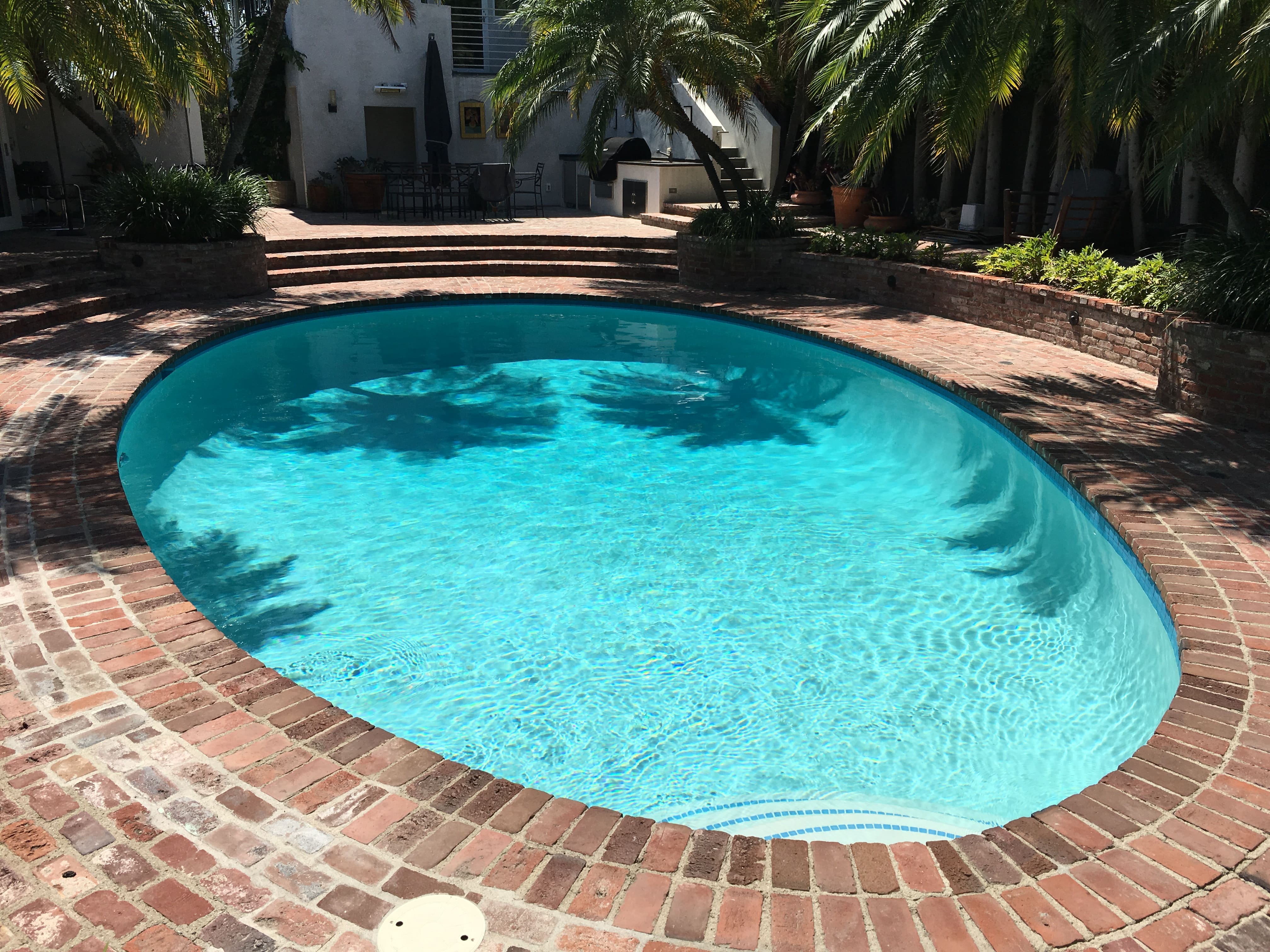
If you have a pool that’s seen better days, the question isn’t always ‘what needs fixing.’ Sometimes it’s whether fixing is even the right move. Pool remodeling and new pool construction are both valid paths – but they serve different situations, carry different costs, and produce different outcomes. Getting this decision right before you spend any money is worth taking seriously.
If you have a pool that’s seen better days, the question isn’t always ‘what needs fixing.’ Sometimes it’s whether fixing is even the right move. Pool remodeling and new pool construction are both valid paths – but they serve different situations, carry different costs, and produce different outcomes. Getting this decision right before you spend any money is worth taking seriously.
This guide is a practical decision framework for Los Angeles homeowners with an existing pool. It covers when remodeling makes sense, when new construction is the better call, how costs and timelines compare, and what a proper structural assessment looks like before you commit to either direction.
Start with the structure
Every decision about an existing pool starts with one question: what condition is the shell in? Everything else – cost, timeline, finish, features – is secondary to the structural integrity of the pool itself.
A pool shell that is fundamentally sound, even if the surface is worn, the tile is dated, and the equipment is ageing, is a good remodeling candidate. A pool shell with significant structural cracks, active water loss, or subsidence issues is a different conversation entirely. Pouring money into a compromised structure – new plaster, new tile, new equipment – without addressing what’s underneath is one of the more expensive mistakes a homeowner can make.
Before any contractor recommends remodeling or replacement, a proper assessment should look at the shell for structural cracks (not just cosmetic surface cracks, which are common and manageable), the plumbing for leaks and deterioration, the equipment pad for signs of water damage or ground movement, and the overall level and alignment of the pool. In older LA properties, particularly those on hillside lots or in areas with expansive clay soils, ground movement over decades can stress a pool shell in ways that are not always visible on the surface.
When remodeling is the right call
Pool remodeling makes sense in most situations where the shell is structurally sound. If the pool holds water without active leaks, sits level, and has no major structural cracking, nearly everything else about it can be updated cost-effectively – often for a fraction of what new construction would cost.
The surface has worn out
Pool plaster has a typical lifespan of eight to fifteen years depending on water chemistry management and the original finish quality. A pool with chalky, rough, or stained plaster is a straightforward remodeling candidate. Replastering with a standard white plaster finish costs $8,000 to $15,000 for a typical LA residential pool. Upgrading to PebbleTec, PebbleSheen, or a quartz finish runs $15,000 to $25,000 and lasts significantly longer.
The tile and coping are dated
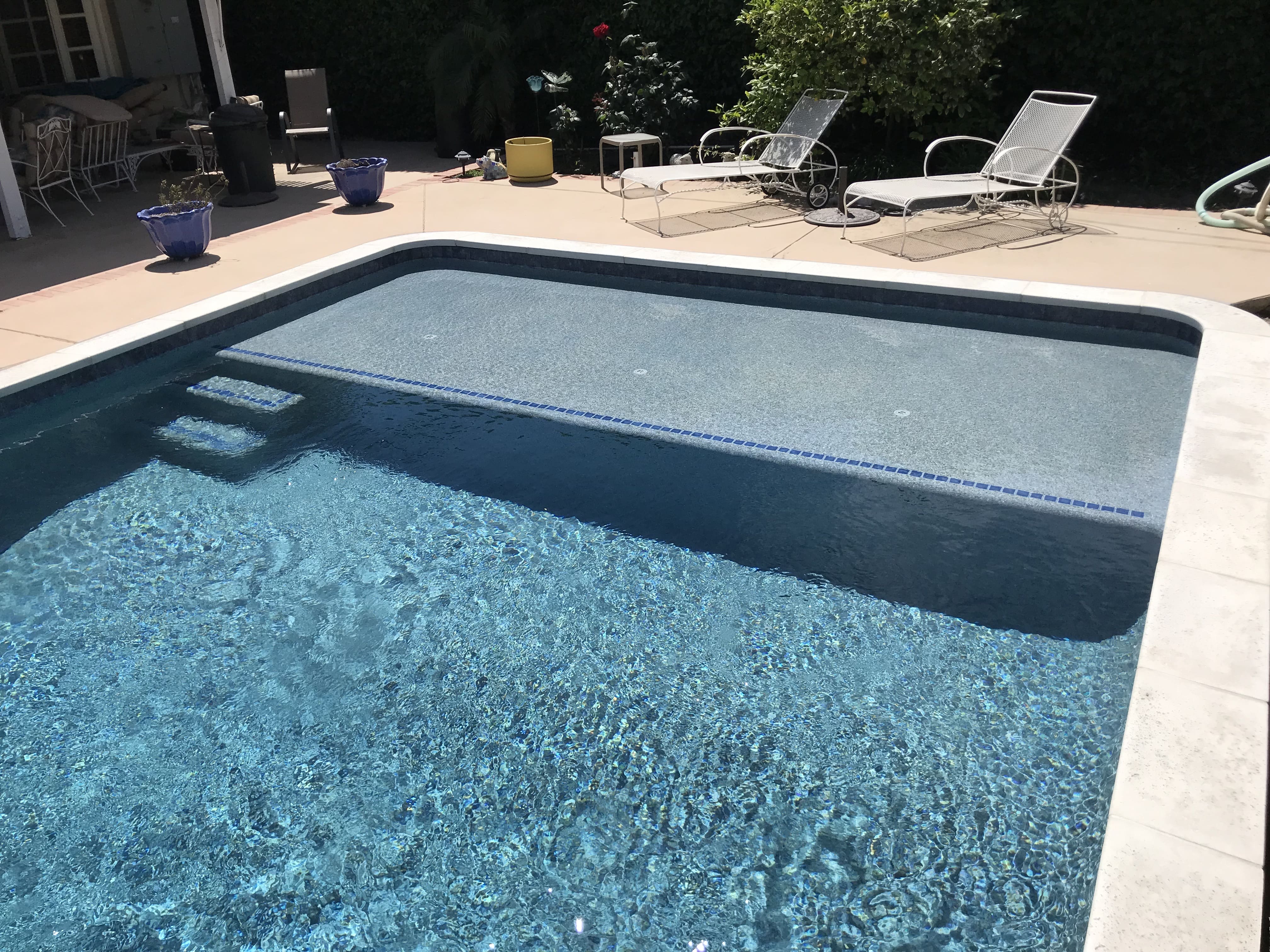
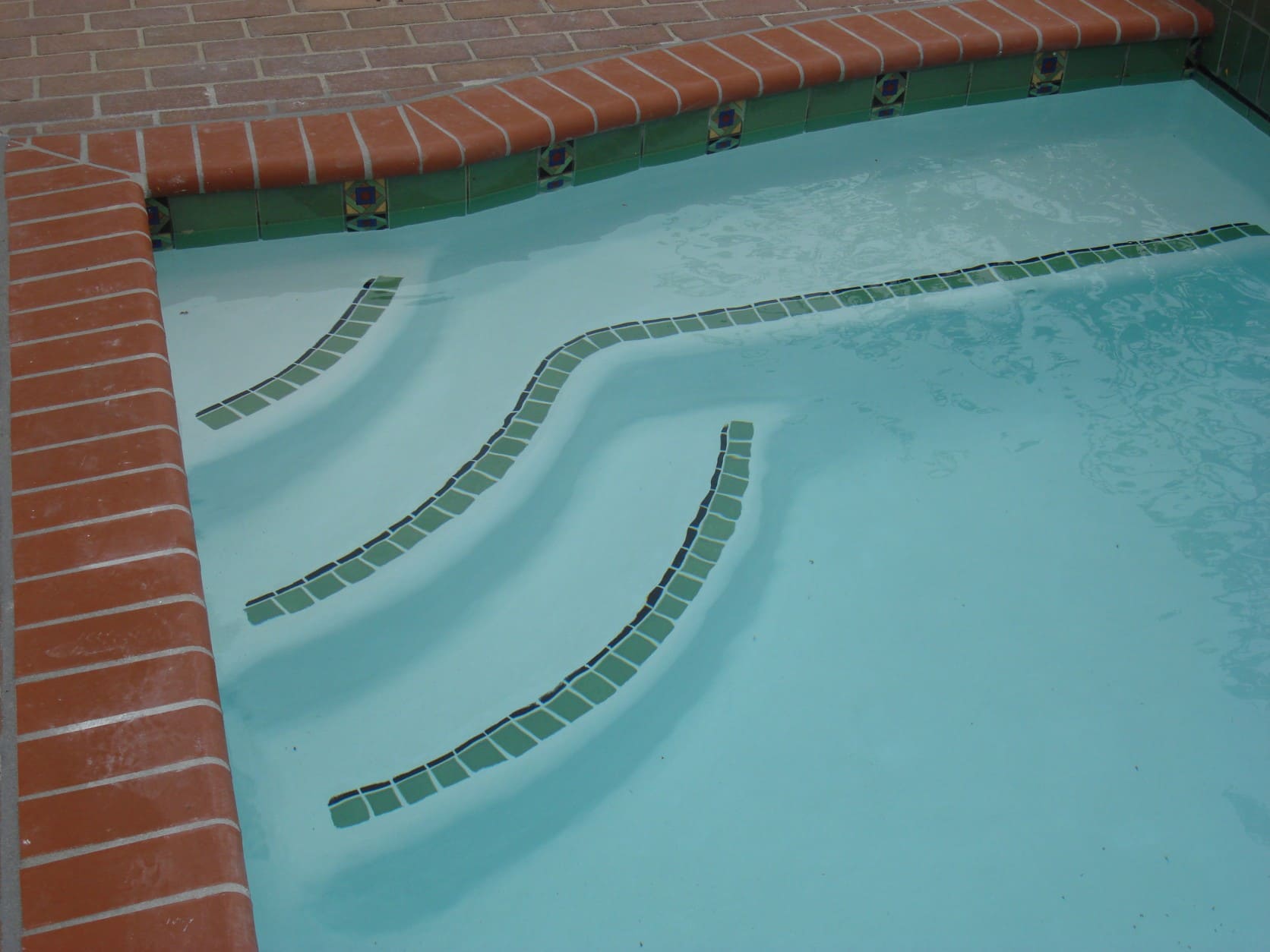
Tile and coping replacement is one of the highest-impact cosmetic updates available on an existing pool. Waterline tile replacement with modern glass or stone tile, combined with new coping, can transform the look of a pool built in the 1980s or 1990s without touching the shell. This work typically runs $8,000 to $20,000 depending on materials and pool perimeter.
The equipment is ageing
Pool equipment – pumps, filters, heaters, automation – has a finite lifespan. A pool with a functional shell and ageing equipment is an excellent remodeling candidate. Replacing single-speed pumps with variable-speed models, adding salt chlorination, and installing a modern automation system like Pentair IntelliCenter or Jandy iAqualink is achievable for $6,000 to $15,000 and dramatically reduces ongoing operating costs.
You want to add features
Spas, water features, LED lighting, and automation can all be added to an existing pool. Adding an attached spa to an existing pool is a significant project – it involves new plumbing, new equipment, and structural modifications – but it remains less disruptive and less expensive than demolishing and rebuilding the entire pool. A spa addition to an existing pool typically runs $20,000 to $40,000 in the LA market.
Budget is a meaningful constraint
A comprehensive remodel – new surface, new tile and coping, new equipment, and some feature additions – typically costs $30,000 to $70,000 for a standard LA residential pool. That is significantly less than the $80,000 to $160,000 range for new gunite construction. If the shell is sound, remodeling delivers most of the visual and functional benefit of a new pool at a substantially lower price point.
When new construction makes more sense
There are situations where remodeling is not the right answer – either because the existing pool cannot support it or because what the homeowner wants is beyond what remodeling can deliver.
Structural damage to the shell
Active water loss from structural cracks, significant shell movement, or evidence of subsidence are situations where remodeling becomes a poor investment. Repairing structural cracks is possible in some cases, but if the underlying cause – soil movement, root intrusion, seismic activity – is ongoing, surface repairs are temporary at best. A structural engineer’s assessment is the right first step when significant cracking is present.
The pool is in the wrong place
Remodeling cannot move a pool. If the existing pool occupies a location that no longer works for the property – perhaps a poorly positioned rectangular pool that limits outdoor living space where a differently shaped or positioned pool would open the yard up significantly – new construction is the only solution.
The shape or size needs to change fundamentally
Gunite pools can be modified – extended, deepened in some cases, or reconfigured at the ends – but there are limits to what structural modification can achieve without effectively rebuilding the pool. If you want a pool that is substantially larger, a different shape entirely, or reconfigured in ways that affect the shell geometry, new construction is generally more practical and cost-effective than trying to modify the existing structure.
The pool predates modern safety and plumbing standards
Very old pools – particularly those built before the 1980s – may have plumbing, electrical, and drain configurations that do not meet current code. In some cases, bringing an old pool up to current standards through a remodel costs nearly as much as starting fresh, particularly if the plumbing needs to be replaced entirely or the drain configuration requires significant modification for Virginia Graeme Baker Act compliance.
Cost comparison
Here is how the two paths compare for a typical Los Angeles residential property.
Remodeling costs
- Surface only (replaster): $8,000 – $15,000
- Surface upgrade (PebbleTec / quartz): $15,000 – $25,000
- Tile and coping replacement: $8,000 – $20,000
- Equipment replacement and upgrade: $6,000 – $15,000
- Spa addition to existing pool: $20,000 – $40,000
- Comprehensive remodel (surface, tile, equipment, features): $30,000 – $70,000
New construction costs
- Basic gunite pool (standard finish, entry-level equipment): $80,000 – $110,000
- Mid-range gunite pool (premium finish, spa, upgraded equipment): $110,000 – $160,000
- Custom build with full features, automation, water features: $160,000+
Demolition of an existing pool, when new construction replaces it, adds $10,000 to $20,000 to the new construction cost. This is an important line item to confirm in any new construction quote when an existing pool is being removed.
Timeline comparison
Remodeling timelines vary by scope. A replaster-only project can be completed in one to two weeks. A comprehensive remodel including new tile, coping, equipment, and surface work typically takes three to six weeks depending on material lead times and contractor scheduling.
New pool construction in Los Angeles follows a longer arc. Permitting alone takes four to eight weeks in most LA jurisdictions. Once permits are in hand, construction from excavation to water typically takes eight to fourteen weeks for a standard build. The full timeline from initial design to swimming is often five to six months, sometimes longer for complex projects or properties that require additional engineering sign-off.
For homeowners planning around a specific season, remodeling is the more predictable path. New construction should be planned at least six months in advance to account for permitting.
How to evaluate your existing pool’s condition
If you’re uncertain which path makes sense, a professional assessment by an experienced pool contractor is the most reliable starting point. Here is what a thorough evaluation should cover.
- Shell inspection – visual inspection for structural cracks, separation at fittings, and signs of movement
- Pressure test – the plumbing lines are pressurised to identify leaks that may not be visible
- Equipment audit – age, condition, and efficiency of pump, filter, heater, and any automation
- Water loss test – if there is suspected leaking, a bucket test or dye test can help identify the source before a more invasive inspection
- Deck and coping condition – lifting, cracking, or separation can indicate ground movement beneath the pool
SoCal Pools® has been assessing and remodeling pools across Los Angeles since 1987. Many of the pools we service today are ones we remodeled fifteen or twenty years ago – and some of those are now due for their second remodel. We can tell you honestly whether your pool is a good remodeling candidate or whether new construction would serve you better in the long run.
CTA
Not sure which direction is right for your pool?
SoCal Pools® offers free, no-obligation assessments for homeowners weighing remodeling against new construction. We’ll look at what you have, tell you what we find, and give you an honest recommendation – along with detailed quotes for both paths if that helps you decide.
.jpeg)






Ready to Start Your Los Angeles Pool Journey?
With nearly 40 years of experience serving Los Angeles families, we understand what makes pools successful in our unique climate and lifestyle. From initial design consultations through construction, equipment installation, and ongoing maintenance, we're your partner in creating backyard paradise.
.svg)
Get a Quote
Simply leave your details, and we'll get back to you right away.





Complete Pool Construction, Remodeling, and Service | Licensed & Insured | Serving Southern California Since 1987
CA Contractors Lic. #618217