


.svg)


.svg)
The Complete Guide to Pool Plastering – Materials, Costs & What to Expect
Pool plaster is the layer of material that lines the interior of a gunite or concrete pool shell and holds the water. It is also the surface your hands and feet touch every time you swim, which means its condition matters beyond aesthetics. When plaster ages, it becomes rough, stains easily, and eventually starts to deteriorate in ways that affect water chemistry and equipment performance. Replastering is one of the most common pool renovation projects in Los Angeles – and one where the material choice has a significant effect on how the finished pool looks, how long the surface lasts, and what it costs to maintain over time.
Pool plaster is the layer of material that lines the interior of a gunite or concrete pool shell and holds the water. It is also the surface your hands and feet touch every time you swim, which means its condition matters beyond aesthetics. When plaster ages, it becomes rough, stains easily, and eventually starts to deteriorate in ways that affect water chemistry and equipment performance. Replastering is one of the most common pool renovation projects in Los Angeles – and one where the material choice has a significant effect on how the finished pool looks, how long the surface lasts, and what it costs to maintain over time.
This guide covers every major interior surface option available for LA residential pools, how Southern California’s specific climate and water chemistry affect different materials, what replastering costs in this market, and what the process looks like from start to finish.
Pool surface options – what’s available and how they compare
The pool surface industry has expanded considerably over the past two decades. Standard white plaster is still available and still used, but most LA homeowners replacing a worn surface today are choosing from a range of aggregate and specialty finishes that offer better durability, more color options, and a more distinctive look.
Standard white plaster
Traditional white plaster is a blend of white cement, marble dust, and water. It produces the classic bright blue pool appearance – the look that defined backyard pools through the 1960s, 70s, and 80s. It is the most affordable interior surface option and, in the right conditions, can last eight to twelve years.
The drawbacks are real. Standard plaster is porous and stains relatively easily, particularly in areas with hard water or inconsistent chemical management. It is also the roughest surface underfoot of all the options listed here. In Southern California, where UV exposure is intense and pools are used year-round, plaster surfaces tend toward the lower end of the lifespan range. Most pool professionals in this market now consider standard plaster the baseline entry point rather than the recommended choice.
Colored plaster
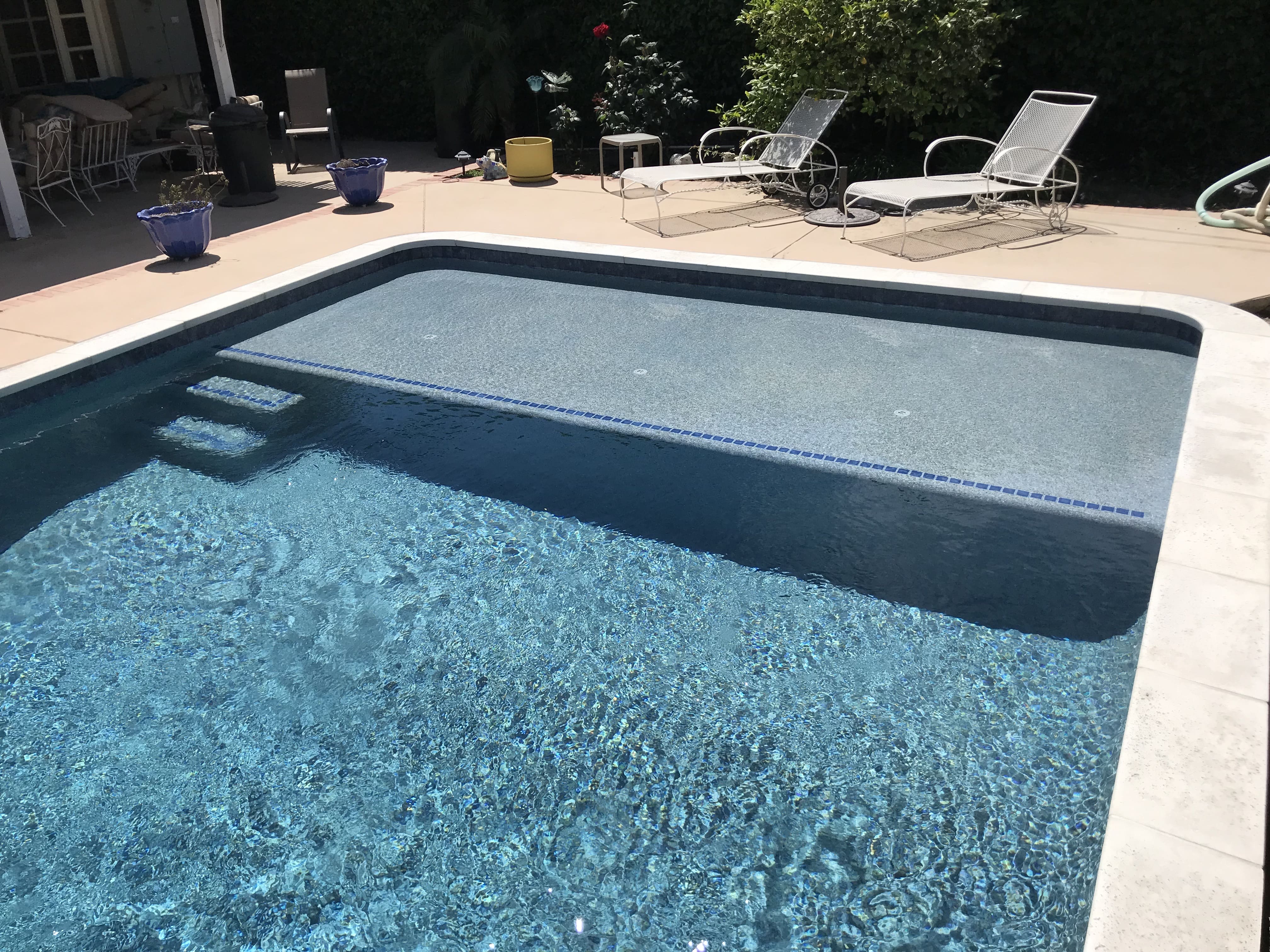
Colored plaster uses the same base mix as standard plaster with pigments added to produce a range of tones – greys, blues, greens, and blacks are common. The finish appearance of the pool changes significantly depending on the color chosen: darker plasters produce a more dramatic, lagoon-like water appearance; lighter greys and blues maintain the traditional pool look while providing more visual interest than standard white.
Colored plaster carries similar durability and maintenance characteristics to standard plaster. The one additional consideration is that color can fade unevenly over time, particularly in high-UV environments like Los Angeles. This is worth discussing with your contractor when selecting a specific shade.
NPT Pebble
NPT Pebble is a proprietary aggregate finish produced by NPT (National Pool Tile) and applied by certified contractors. It consists of small natural pebbles embedded in a cement matrix, producing a textured surface that is significantly more durable than plaster and available in a wide range of color combinations.
PebbleTec is the most widely specified premium pool surface in Southern California, and for good reason. It lasts significantly longer than standard plaster – typically fifteen to twenty-five years with proper water chemistry management – and it handles the hard water common in the San Fernando Valley and Ventura County better than plaster does. The texture underfoot is coarser than plaster alternatives like quartz or glass bead finishes, which is worth considering if young children will be using the pool frequently.
PebbleTec cost in the LA market: $18,000 to $28,000 for a standard residential pool, depending on size and color selection.
NPT Mini-Pebble
NPT Mini-Pebble is also an NPT product – a finer aggregate version of PebbleTec that uses smaller pebbles and produces a smoother surface finish. It retains most of the durability advantages of PebbleTec while offering a softer texture that many homeowners prefer. The color range is comparable, and the lifespan is similar: fifteen to twenty-plus years in well-maintained pools.
PebbleSheen tends to cost slightly more than PebbleTec in most markets, typically $20,000 to $30,000 installed in LA, reflecting the additional labor involved in the finer application.
QuartzScapes and quartz-based finishes
Quartz aggregate finishes use crushed quartz rather than natural pebbles, producing a smooth, dense surface with a slight shimmer. They are harder than plaster, more stain-resistant, and generally smoother underfoot than PebbleTec. Quartz finishes are a popular middle ground between standard plaster and full aggregate finishes – they offer meaningfully better durability and a more refined surface texture than plaster at a lower price point than premium pebble finishes.
Quartz finish lifespan typically runs twelve to eighteen years. Cost in the LA market: $14,000 to $22,000 depending on pool size and product.
Glass bead finishes
Glass bead finishes incorporate small glass beads into the plaster mix, producing a smooth, slightly reflective surface that catches light differently from aggregate or plain plaster finishes. They tend to be the smoothest option underfoot and create a distinctive visual effect, particularly under lighting. Glass bead surfaces are well suited to pools designed with a premium aesthetic in mind.
Durability is comparable to quartz – twelve to eighteen years – with somewhat higher sensitivity to chemical imbalances than pebble finishes. Cost: $16,000 to $26,000 installed.
How Southern California’s conditions affect pool surfaces
Pool surface performance in Los Angeles is shaped by a specific set of environmental conditions that differ from what pool owners in other parts of the country experience.
Hard water
Much of the LA area, particularly the San Fernando Valley and Ventura County, has high calcium hardness in the municipal water supply. Hard water accelerates calcium scaling on pool surfaces, which shows up as a white or grey deposit on the waterline tile and, over time, on the interior surface itself. Aggregate finishes like PebbleTec and PebbleSheen handle hard water significantly better than standard plaster, which is one of the primary reasons they dominate the local market. Regular water chemistry management and periodic acid washing help extend surface life in hard water areas regardless of finish type.
UV exposure
Los Angeles averages over 280 sunny days per year. Sustained UV exposure affects pool surface color over time, particularly with colored plaster and some quartz finishes. Darker colors tend to show fading more noticeably than lighter ones. Aggregate finishes are generally more UV-stable than plaster because the color is embedded in the aggregate material rather than the cement matrix.
Year-round use
A pool in Los Angeles is realistically usable ten to eleven months of the year. Higher bather load and year-round chemical demand put more cumulative stress on pool surfaces than seasonal pools in other climates experience. This makes the durability case for premium aggregate finishes more financially compelling in this market than in regions where pools sit idle for months at a time.
Signs your pool surface needs replacing
Pool surfaces do not fail suddenly – they deteriorate gradually, and recognising the signs early gives you the option to plan the work rather than react to it.
- Rough texture – if the surface catches swimsuits or scratches skin, the plaster has degraded past the point where brushing or acid washing will restore it
- Persistent staining – stains that don’t respond to chemical treatment or brushing indicate surface porosity has increased to the point where the material is absorbing rather than repelling discoloration
- Chalky or dusty appearance – plaster that releases a white, chalky residue when brushed is in advanced deterioration
- Visible cracks or delamination – cracks in the surface layer (as opposed to structural cracks in the shell) allow water to infiltrate behind the plaster, accelerating further breakdown
- Etching – a pitted, uneven surface texture caused by low pH water over time; etching cannot be reversed and indicates replastering is needed
- Equipment issues – deteriorating plaster releases calcium and other minerals into the water, which can affect chemical balance and accelerate scale buildup on equipment
What the replastering process looks like
Replastering a pool is a multi-step process that requires draining the pool, removing the old surface, and applying the new finish under controlled conditions. Here is what to expect.
Draining
The pool is drained completely. This is done carefully and in accordance with local water authority requirements – pool water cannot simply be discharged to a storm drain in most LA jurisdictions. A qualified contractor handles the appropriate discharge method. Empty pools are vulnerable to floating or shifting if there is hydrostatic pressure from groundwater, which is why timing and drainage method matter.
Surface preparation
The old plaster is chipped out and the shell surface is prepared to accept the new material. This typically involves a chisel or chipping hammer to remove the existing finish down to the gunite shell, followed by acid washing and inspection of the bare shell for any cracks or repairs needed before the new surface goes on.
Repairs
Any cracks in the shell, fitting repairs, or structural issues identified during the surface preparation phase are addressed before plastering begins. This is also the time to replace fittings, lights, or drains if they are due for replacement – doing it during a replaster is far less disruptive than retrofitting after the new surface is in.
Application
New plaster or aggregate finish is applied by a trained crew, typically in a single continuous session to avoid visible seams or color variation. Aggregate finishes require additional steps: the pebbles or aggregate are hand-trowelled into the wet cement matrix, then the surface is washed down with acid to expose the aggregate and produce the finished texture. The application process for premium finishes takes longer than standard plaster and requires more skilled labor, which is reflected in the cost difference.
Fill and startup
Once the surface has cured sufficiently, the pool is refilled and a careful startup process begins. New plaster and aggregate surfaces require a specific chemistry startup protocol – typically a two to four week period during which the pH, alkalinity, and calcium hardness are carefully managed to allow the surface to cure properly without scaling or etching. Skipping or rushing this step is the most common cause of premature surface problems. A reputable contractor will walk you through the startup process and, ideally, manage it for you.
Total time from draining to swimming: typically one to three weeks for standard plaster, two to four weeks for premium aggregate finishes.
Cost summary for LA homeowners
- Standard white plaster: $8,000 – $14,000
- Colored plaster: $9,000 – $15,000
- Quartz / QuartzScapes: $14,000 – $22,000
- Glass bead finishes: $16,000 – $26,000
- PebbleSheen: $20,000 – $30,000
- PebbleTec: $18,000 – $28,000
All figures reflect typical LA market pricing for a standard residential pool (approximately 15,000 – 20,000 gallons). Larger pools, complex shapes, and additional repairs identified during surface preparation will affect the final cost. These figures include material, labor, and startup chemistry but not decking, tile, or coping work if those are being done simultaneously.
CTA
Ready to give your pool a new surface?
SoCal Pools® has been plastering and refinishing pools across Los Angeles since 1987. We are a certified PebbleTec applicator and work with the full range of interior finish options. If you’re not sure which surface is right for your pool, we’ll walk you through the options and give you an honest recommendation based on your pool’s condition, your usage patterns, and your budget.
.jpeg)






Ready to Start Your Los Angeles Pool Journey?
With nearly 40 years of experience serving Los Angeles families, we understand what makes pools successful in our unique climate and lifestyle. From initial design consultations through construction, equipment installation, and ongoing maintenance, we're your partner in creating backyard paradise.
.svg)
Get a Quote
Simply leave your details, and we'll get back to you right away.





Complete Pool Construction, Remodeling, and Service | Licensed & Insured | Serving Southern California Since 1987
CA Contractors Lic. #618217